Adding Stereo Vision Hardware to a Wheeled-Leg Robot
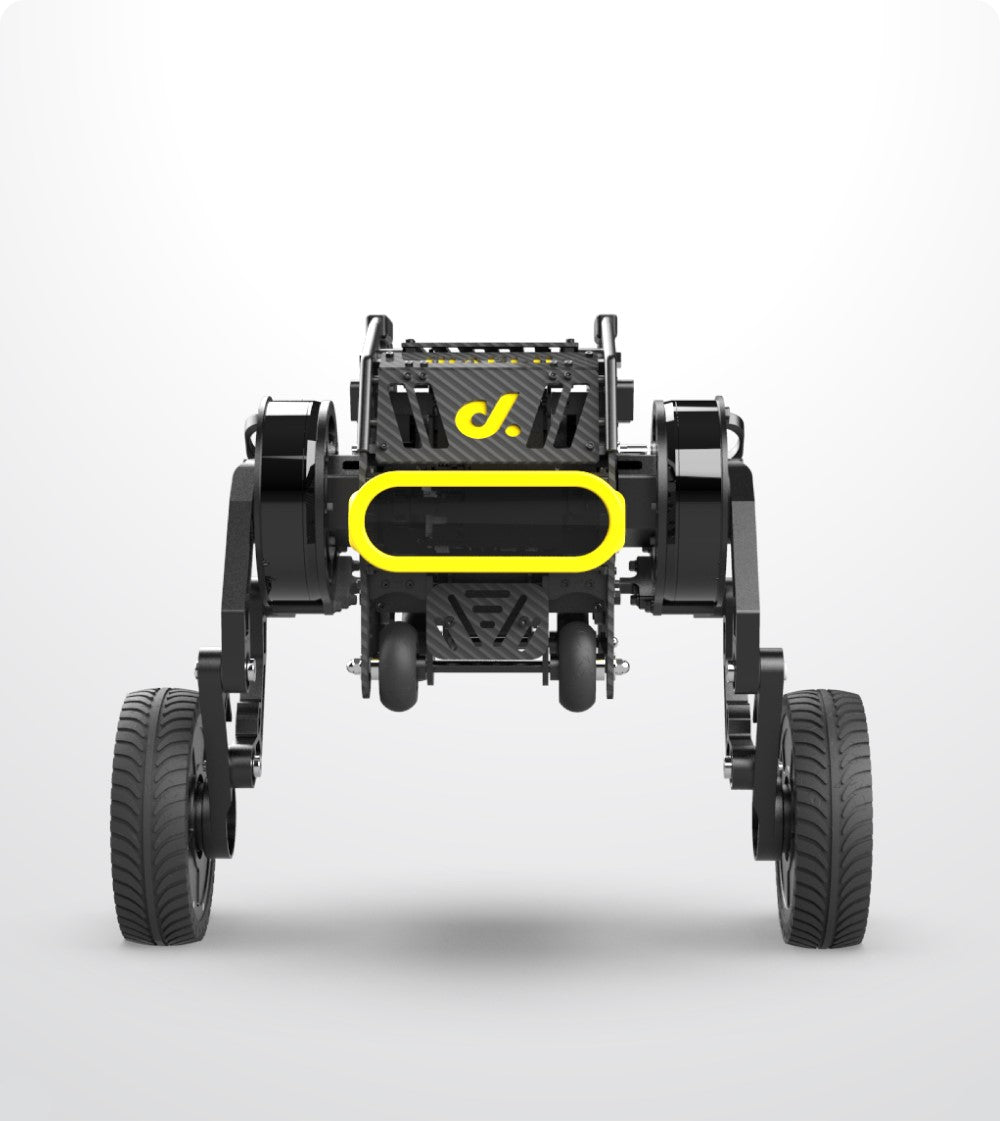
Adding stereo vision hardware to a wheeled-leg robot requires selecting cameras, computing platforms, and integration methods that match the robot’s movement speed, terrain type, and navigation needs. A suitable stereo system can provide depth perception from 0.2 m to more than 30 m, with many modern modules supporting 30–60 FPS image processing. For developers using wheeled robot development kits, stereo vision upgrades allow robots to detect obstacles, estimate terrain height, and improve autonomous movement without relying only on external sensors.
Stereo vision works by using two cameras placed at a fixed distance to capture images from slightly different viewpoints. The difference between the two images, known as disparity, allows the robot to estimate distance. A typical stereo camera with a 60–120 mm baseline can achieve centimeter-level depth accuracy at short ranges, while larger baselines improve performance for outdoor environments above 10 m.
A stereo camera system usually includes synchronized image sensors, a rigid mounting structure, calibration data, and software for depth calculation. Each part affects the final perception quality.
For wheeled-leg robots, the camera selection process is different from stationary robots. These platforms combine wheel movement with leg-based climbing or stepping, which creates frequent changes in camera angle. A camera that works well on a fixed robot arm may produce unstable results when installed on a robot moving across uneven surfaces.
| Hardware factor | Common specification | Effect on robot |
|---|---|---|
| Camera resolution | 720p–4K | Higher resolution improves distance measurement |
| Frame rate | 30–60 FPS | Higher FPS supports faster movement |
| Baseline distance | 50–150 mm | Larger baseline improves long-range depth |
| Shutter type | Global shutter preferred | Reduces motion distortion |
| Interface | USB 3.0, MIPI, Ethernet | Determines data transmission speed |
The mechanical installation of stereo cameras directly affects calibration stability. During walking or climbing, a wheeled-leg robot can experience vibration from motors, suspension systems, and contact with uneven ground. Even a small camera movement after calibration can reduce depth accuracy because the stereo algorithm depends on fixed camera geometry.
A rigid aluminum or carbon fiber mounting bracket is commonly used for research robots. Some platforms add vibration isolation materials between the camera mount and robot frame. In field tests, reducing mechanical vibration can improve depth consistency by more than 20% compared with a loosely mounted camera system.
Camera placement should provide a clear view of the environment while keeping the sensor protected from impacts during movement.
The camera position also changes how the robot understands its surroundings. A front-mounted stereo camera is often used for navigation because it provides direct information about upcoming terrain. A higher mounting position improves visibility over small obstacles, while a lower position provides better information about ground contact conditions.
Many wheeled-leg robots place stereo cameras near the upper body section. This position provides a balance between viewing distance and mechanical protection. For example, a camera mounted 40–80 cm above the ground can detect common indoor obstacles such as steps, boxes, and furniture before the robot reaches them.
After hardware installation, the stereo data must be processed in real time. The typical workflow includes image capture, camera calibration, image rectification, disparity calculation, depth generation, and obstacle recognition.
Modern stereo cameras often include built-in processors that reduce the workload on the main robot computer. In 2024, many commercial stereo modules supported real-time depth output at 30 FPS or higher, allowing mobile robots to process environmental information while moving.
| Processing task | Typical requirement |
|---|---|
| Image synchronization | Microsecond-level timing accuracy |
| Calibration | Accurate camera parameters |
| Depth calculation | GPU or dedicated processor support |
| Object recognition | AI model acceleration |
| Mapping | Integration with SLAM algorithms |
The computing platform must match the camera output. A high-resolution stereo camera can produce hundreds of megabytes of image data per second. Without sufficient processing capability, the robot may experience delayed perception, reducing navigation performance.
Common computing solutions include embedded NVIDIA platforms, ARM processors, and industrial computers. For example, a stereo camera running at 1920×1080 resolution and 30 FPS requires much more processing capacity than a 640×480 system. Developers often select hardware based on power consumption, available memory, and required AI performance.
Power management is especially important for mobile robots. Motors already consume a large portion of battery energy, so perception hardware must be selected carefully. Compact stereo cameras may consume 2–5 W, while advanced AI stereo systems can exceed 15 W.
A balanced design usually combines sufficient image quality with acceptable energy consumption rather than selecting the highest specification camera available.
Stereo vision becomes more useful when combined with other sensors. A wheeled-leg robot usually integrates stereo cameras with IMU sensors, wheel encoders, LiDAR, or GPS modules. Each sensor provides different information.
| Sensor | Main information |
|---|---|
| Stereo camera | Depth and object shape |
| IMU | Robot orientation and acceleration |
| Wheel encoder | Wheel movement information |
| LiDAR | Long-range distance measurement |
| GPS | Outdoor position information |
Sensor fusion allows robots to operate in more environments. Stereo cameras perform well when objects have visible textures, but they may have reduced accuracy on plain walls, dark surfaces, or strong reflective materials. Additional sensors can provide supporting measurements in these situations.
Navigation software uses stereo depth data for several tasks, including obstacle avoidance, 3D mapping, and terrain evaluation. Unlike simple wheeled robots that only need flat ground detection, wheeled-leg robots must understand whether an object can be passed by driving, climbing, or changing direction.
For example, a robot approaching a 15 cm step may use stereo data to estimate height and distance before selecting a movement mode. The robot controller can then decide whether to climb using legs or continue using wheels.
Visual SLAM is another important application. Stereo cameras provide both image features and depth information, allowing robots to build three-dimensional maps while moving. Many research platforms use stereo SLAM systems with update rates between 20 and 60 Hz.
Environmental conditions also influence hardware selection. Indoor robots usually operate under stable lighting, while outdoor robots face sunlight changes, rain, dust, and temperature variation.
A stereo camera designed for outdoor wheeled-leg robots often requires protective housing and a wider operating temperature range. Industrial systems commonly support temperatures from approximately -20°C to 50°C and may include IP-rated protection against dust and water exposure.
For developers building robotic platforms, modular kits can reduce integration time. Some wheeled robot development kits already include motor controllers, communication interfaces, and mounting structures, allowing engineers to add stereo cameras without redesigning the entire platform. Hardware compatibility is an important consideration when selecting a base robot system.
Artificial intelligence is also changing stereo vision applications. Traditional stereo algorithms mainly estimate depth, while newer systems combine depth estimation with neural networks for object recognition and terrain classification.
A robot equipped with AI-based stereo perception can identify different surfaces such as concrete, grass, stairs, and loose ground. This information helps the control system adjust movement speed and select appropriate locomotion methods.
Between 2018 and 2025, advances in embedded AI processors reduced the size and power requirements of robotic vision systems. Many mobile robots that previously required desktop computers can now process stereo data using compact onboard computers.
The combination of stereo cameras, efficient processors, and robot control software allows wheeled-leg platforms to operate in environments that require both speed and terrain adaptability.
Adding stereo vision hardware is not limited to attaching two cameras to a robot frame. Successful integration requires suitable camera parameters, stable mechanical installation, enough computing resources, and software that connects perception with movement control. With proper hardware selection, wheeled-leg robots can achieve more reliable navigation and better performance in indoor, industrial, and outdoor environments.